 Skip to content
How to Sell a Rental Property After an Eviction
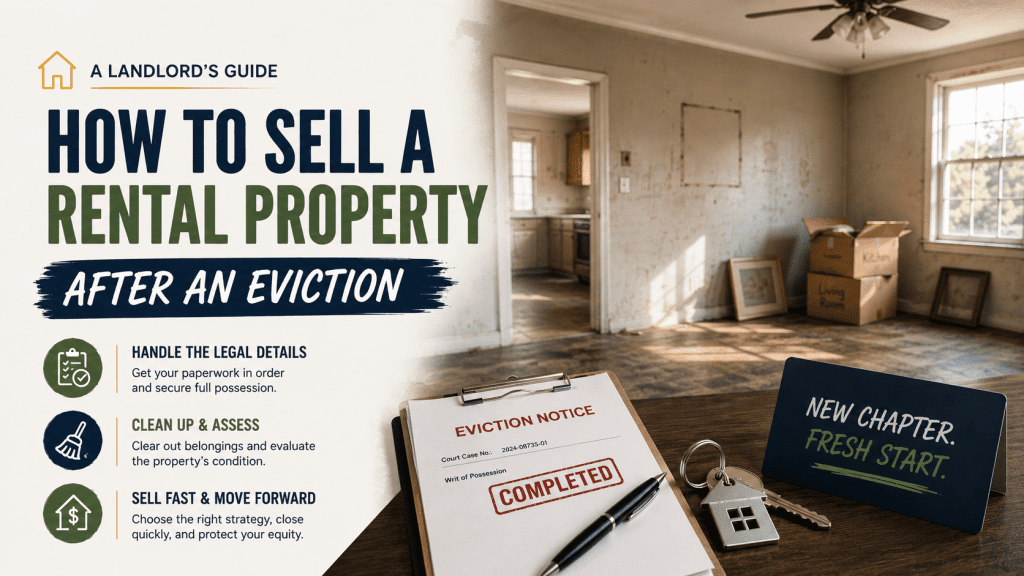
Going through an eviction is exhausting. By the time the sheriff executes the writ and you finally get the property back, you’re often dealing with financial strain, property damage, and plain old landlord burnout.
If you’re ready to move on from the property, you’re not alone. Figuring out how to sell a rental property after an eviction is a common next step, but it does require a specific approach. This guide walks you through how to clear the legal loose ends, handle the property safely, and decide whether to make repairs or sell as-is so you can recoup your equity and move forward.
Why Selling After an Eviction Is Different
When a tenant is legally removed, the property enters a transition period where timing and legal issues matter more than usual. For owners looking to sell a rental property after eviction, the process often comes with a few extra hurdles.
Some of the most common challenges include:
1. Property stigma from the eviction history
2. Ongoing holding costs while the property sits vacant
3. Abandoned belongings that need to be handled carefully
Traditional buyers using conventional financing are often hesitant about properties that look neglected or come with a complicated history. That’s why many landlords choose to sell directly to real estate investors or cash buyers. Those buyers are usually more focused on the property’s potential than on cosmetic problems or recent tenant issues.
Why Eviction Properties Can Carry Stigma
Eviction properties often carry a stigma because buyers tend to assume there’s more wrong with the home than just the eviction itself. They may worry about hidden damage, neglected maintenance, leftover tenant issues, or a longer-than-usual vacancy, even when the property is otherwise in decent shape.
That stigma can make it harder to sell through the traditional market, especially to buyers who want a move-in-ready home and don’t want to take on uncertainty. Investors and cash buyers are usually more focused on the property’s actual condition, the repair budget, and the numbers behind the deal.
That’s one reason many landlords choose to sell as-is after an eviction. It can help you move past the stigma faster and avoid spending time and money trying to convince a traditional buyer that the property is worth the risk.
What You Need Before You Sell
Before you think about listing the property or showing it to buyers, make sure you’ve got full legal control.
Start by gathering your court paperwork. That usually includes the writ of possession and the sheriff’s return of service, which confirm that the eviction is complete and the tenant no longer has a right to the property.
You should also check for any outstanding liens, unpaid court costs, or other title issues that could delay the sale. If anything’s unresolved, it can slow down closing or even create problems for the buyer later.
Once you’ve confirmed possession, change the locks right away. After that, inspect the property thoroughly and take detailed photos and videos of every room so you have a clear record of its condition before you begin cleaning or removing anything.
How to Handle Abandoned Property After an Eviction
One of the biggest mistakes landlords make after an eviction is throwing away the tenant’s belongings too quickly.
Most states have laws about abandoned property, and you may be required to store items for a certain period of time and notify the tenant before disposing of them. The exact rules depend on your state, so it’s important to follow local law closely.
If you dispose of belongings too soon, the former tenant could claim damages later. To protect yourself, document everything during the cleanout, keep a written inventory if needed, and consider working with a junk removal company that understands landlord-tenant rules.
How to Sell a Damaged Rental Property As-Is
Once the property is empty, it’s time to take a close look at its overall condition. Evictions often leave behind damage like stained carpet, broken appliances, holes in the walls, missing fixtures, or lingering cleanup issues that make the home harder to show.
At this point, you’ll need to decide whether the property is worth repairing before you sell. If the home’s structure, plumbing, and electrical systems are in good shape, a few targeted updates may help you get a stronger offer. But if the damage is extensive, or you don’t want to coordinate repairs, an as-is sale can save you time, money, and stress.
Repair costs can add up faster than many landlords expect. Simple fixes like drywall patching or painting might only cost a few hundred dollars, while larger jobs like carpet replacement, plumbing repairs, or HVAC work can climb into the thousands. That’s why it helps to compare the likely repair bill against the price increase those repairs might bring before deciding what to do next.
Many investors buy damaged properties because they’re comfortable handling renovations themselves. That means you can often skip the upfront repair costs and move straight toward closing, which can be especially helpful if holding costs are already piling up.
How to Compare Repairs and Offer Price
If you’re still weighing your options, the smartest move is to compare the cost of repairs with the likely resale value after those repairs are done.
Getting a few contractor estimates can help you decide whether the property needs only light cosmetic work or a deeper rehab. If the updates are simple and inexpensive, a traditional listing may still make sense. But if the repair budget is high or the work would take too long, selling as-is may leave you in a better financial position overall.
This matters because holding costs don’t stop while you’re making repairs. Mortgage payments, taxes, insurance, utilities, and other expenses can keep adding up every month the property sits vacant. In many cases, those carrying costs can erase the extra profit you hoped to get from fixing the home first.
How to Price a Rental Property After Eviction
If you do decide to list the property, pricing it correctly matters.
A few smart strategies include:
1. Price for momentum by setting the home slightly below market value
2. Be transparent about the eviction history
3. Highlight the property’s strongest features, such as location, layout, or rental demand
Buyers appreciate honesty, and investors in particular are often fine with an eviction history as long as they understand the property’s condition and potential. If the home is already vacant, that can actually help your marketing because it’s easier to schedule showings and easier for buyers to picture the property’s potential.
How the Closing Process Works
Closing a post-eviction sale is usually much easier when the paperwork is organized. Cash sales often move faster because they don’t depend on appraisals, mortgage approval, or lengthy underwriting steps.
Here’s a simple comparison:
| Traditional Financed Sale | Direct Cash Home Buyer |
| Timeline: 45 to 60+ days | Timeline: 7 to 14 days |
| Showings: Open houses and repeated walkthroughs | Showings: A single brief visit |
| Fees: 5-6% agent commissions + closing costs | Fees: Zero commissions, buyer usually covers closing costs |
| Contingencies: Contingent on financing and home inspection | Contingencies: None; explicit as-is purchase |
To keep escrow moving smoothly, have your deed, utility bills, tax records, and court eviction documents ready. Your title company will use them to clear the property for transfer and avoid delays. If the title is clean and the documents are organized, the sale can move much more quickly than a traditional listing.
Frequently Asked Questions About Selling After an Eviction
Final Thoughts on Selling After an Eviction
An eviction is a stressful chapter, but it doesn’t have to define what happens next. Once you’ve secured your paperwork, handled the legal details, and decided whether to repair or sell as-is, you can put the situation behind you.
For many landlords, the biggest benefit of a fast cash sale is a clean break from the property and the work that comes with it. If you’re done dealing with repairs, showings, and holding costs, We Are Home Buyers can take a look at the property and let you know what kind of offer may be possible. Call us at (706) 670-6886 or fill out a form on our contact page to get the conversation started.
